Kai Griffin · 16 September 2026
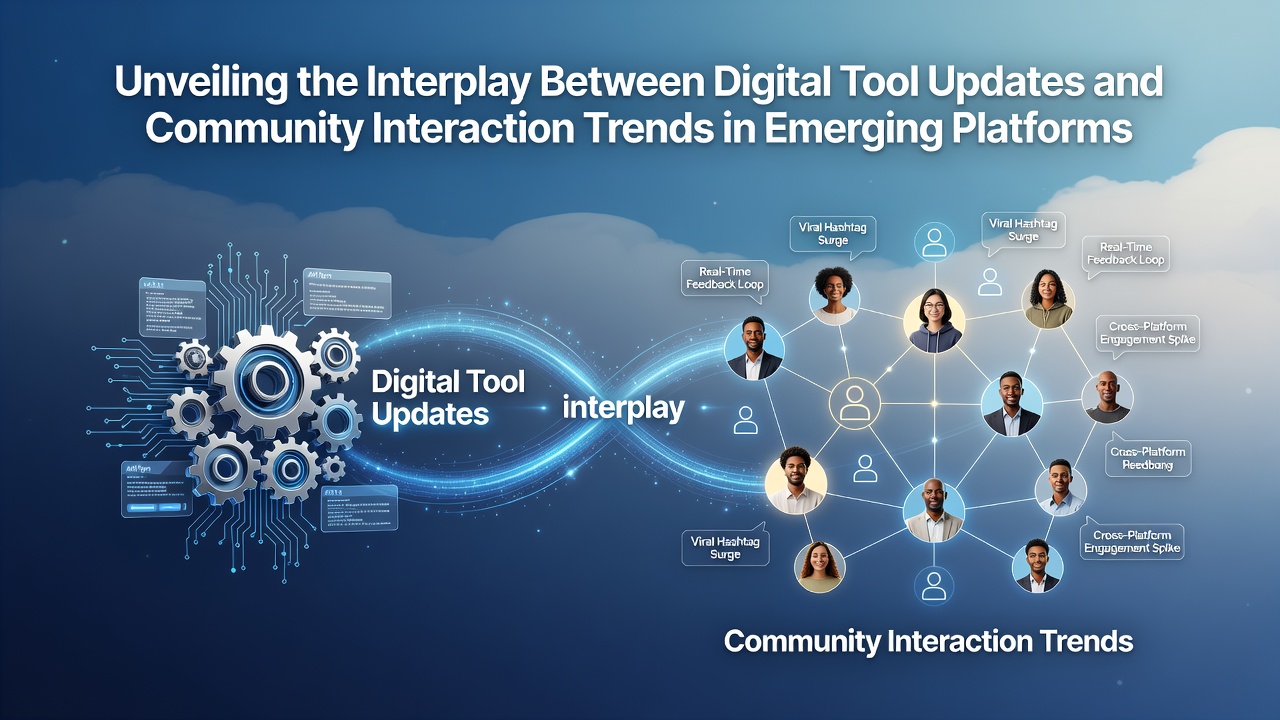
Unveiling the Interplay Between Digital Tool Updates and Community Interaction Trends in Emerging Platforms
Emerging platforms continue to release tool updates that reshape how users connect, share, and collaborate, and these changes produce measurable shifts in interaction patterns across digital spaces. Researchers track these developments through usage data and engagement metrics, which reveal consistent correlations between feature rollouts and community behaviors.
Platform Evolution and Tool Integration
Digital tools in newer platforms often incorporate real-time collaboration features, automated moderation systems, and integrated analytics dashboards, and these additions allow communities to organize content and discussions with greater precision. Data from multiple platform analyses show that when developers introduce AI-assisted tagging or threaded reply enhancements, participation rates rise in structured groups while casual posting declines in some cases. Observers note that such integrations encourage users to spend longer sessions within specific channels or forums, since the tools reduce friction in locating relevant conversations.
Updates frequently bundle several changes at once, and this approach creates layered effects on interaction trends. For instance, a single release might combine improved search functions with new notification controls, which together prompt members to engage more selectively rather than responding to every alert. Studies conducted by academic teams at institutions across North America and Europe indicate that these combined updates lead to higher retention in niche communities but can fragment broader networks when users filter their feeds aggressively.
Influence on User Behaviors and Group Dynamics
Community interaction trends respond directly to modifications in core tools, and patterns emerge when platforms adjust visibility algorithms or introduce private messaging upgrades. Evidence from usage logs demonstrates that enhanced privacy controls tend to increase one-on-one exchanges while decreasing public thread activity in certain emerging networks. Those who monitor these shifts report that members migrate toward smaller, invitation-only spaces once granular permission settings become available, which alters the overall tone and frequency of group discourse.
September 2026 marks a period when several platforms plan synchronized tool refreshes, and analysts expect these coordinated changes to accelerate existing trends toward hybrid interaction models that blend synchronous and asynchronous participation. Regulatory frameworks from bodies such as the European Commission continue to guide how platforms implement transparency requirements around algorithmic updates, and this guidance influences the pace at which new features reach users in different regions.

Observed Trends Across Emerging Platforms
Interaction data collected over recent cycles reveals that tool updates emphasizing multimedia sharing correlate with spikes in visual content creation, whereas text-focused enhancements sustain longer discussion threads. Platforms that prioritize accessibility tools, including caption generation and screen reader compatibility, experience broader demographic participation according to reports compiled by research organizations in Canada and Australia. These adjustments also reduce dropout rates among users with varying technical proficiency, which strengthens overall community stability.
Yet the same updates sometimes produce unintended clustering effects, and communities segment along lines of preferred features when multiple options coexist. Figures from industry tracking services show that members who adopt new collaboration tools early tend to form core groups that later influence platform-wide norms, while late adopters remain in legacy interaction modes for extended periods. This divergence creates parallel trends within single platforms, where different subgroups develop distinct communication styles based on the tools they utilize most.
Regulatory and Technical Context
Government agencies and standards bodies supply guidelines that shape how platforms deploy tool updates, and these directives affect community interaction by mandating clearer consent mechanisms and data handling practices. Reports from the OECD highlight how cross-border coordination on digital policy influences feature availability timelines, which in turn determines when users in various jurisdictions encounter changes that alter their daily engagement routines. Technical constraints such as server infrastructure limits further modulate the rollout speed, leading to staggered effects on interaction metrics across regions.
Developers respond to these external pressures by testing updates in controlled environments before wider release, and the results of those tests inform adjustments that better align with observed community needs. Researchers continue to examine longitudinal data sets to identify which tool categories produce the most durable shifts in participation patterns, and their findings feed back into subsequent development cycles.
Conclusion
The relationship between digital tool updates and community interaction trends operates through interconnected mechanisms that platforms, regulators, and users collectively influence over time. Continued monitoring of engagement statistics and behavioral indicators provides the factual basis for understanding these dynamics as emerging platforms mature and adapt their offerings.