Ellis Berger · 30 September 2026
How Community Feedback Shapes Tool Customization in Digital Workspaces
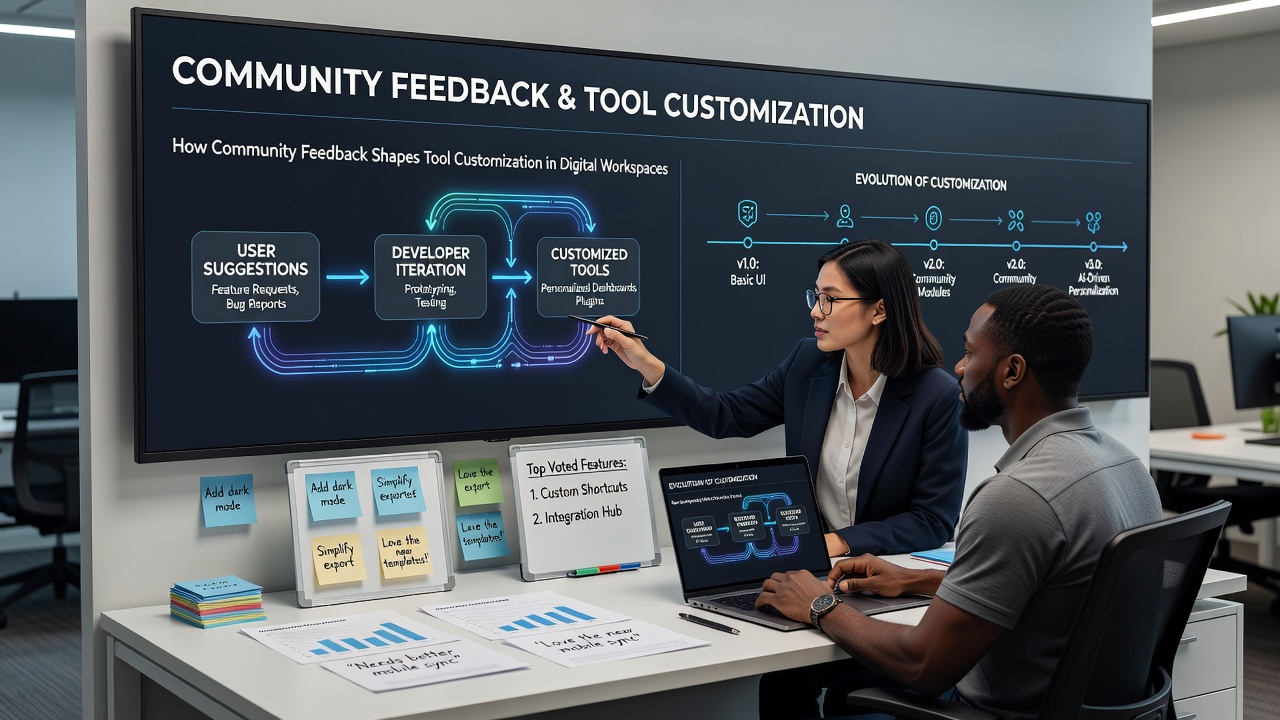
Digital workspaces such as collaborative platforms and productivity suites have evolved through structured channels where user input directly influences feature adjustments, and data collected from these interactions shows measurable shifts in tool interfaces over successive updates. Researchers at various institutions track how suggestions submitted via in-app forms, community forums, and survey responses translate into modifications that alter navigation menus, permission settings, and integration options within applications used across industries.
Mechanisms Driving Feedback Integration
Platform operators gather input through multiple pathways including dedicated user councils, public roadmaps that allow voting on proposed changes, and analytics derived from usage patterns which reveal friction points without requiring explicit comments. Studies indicate that when developers prioritize items ranked highest by active participants, customization options expand to include granular controls over notification preferences and workspace layouts that previously remained fixed. This process operates on cycles where quarterly reviews incorporate aggregated data from thousands of submissions, leading to targeted releases that address recurring requests.
One analysis conducted across enterprise environments found that teams adopting iterative customization based on internal feedback loops reported higher retention rates for core features compared to those relying solely on vendor-driven defaults. The approach relies on transparent documentation that outlines which suggestions advanced and the rationale behind selections, fostering continued participation from contributors in different regions.
Customization Outcomes in Practice
Evidence from deployment logs demonstrates that community-sourced adjustments often result in modular components, allowing administrators to enable or disable specific modules such as task automation scripts or shared document templates. In September 2026, reports presented at a digital collaboration conference highlighted how several major platforms introduced region-specific language packs and accessibility toggles following concentrated input from international user groups. These updates addressed needs identified through coordinated campaigns on official discussion boards, where participants supplied detailed use cases from healthcare and education sectors.

Observers note that such refinements extend beyond surface-level changes to include backend permissions that let organizations tailor data retention policies according to collective recommendations. When feedback clusters around security configurations, for instance, developers respond with enhanced audit trails and role-based access variations that align with patterns observed across multiple organizations.
Data Patterns and Geographic Variations
Figures compiled by research bodies reveal consistent trends where North American and European users emphasize mobile synchronization capabilities, whereas submissions from Asia-Pacific contributors frequently focus on integration with local compliance frameworks. A report issued by the European Commission on digital innovation outlines how aggregated feedback contributed to standardized export functions across workspace applications, reducing compatibility issues reported by cross-border teams. Meanwhile, data from Canadian sources on technology adoption shows parallel increases in customizable dashboard elements following public beta testing periods.
Those monitoring these developments point out that platforms maintaining open changelogs experience sustained engagement, as participants can trace direct connections between their input and implemented modifications. This visibility encourages detailed follow-up comments that refine subsequent iterations rather than repeating earlier proposals.
Challenges in Scaling Community Input
Although the system delivers targeted improvements, volume management remains a factor when thousands of overlapping suggestions arrive simultaneously, requiring prioritization algorithms that balance frequency against technical feasibility. Organizations that implement weighted scoring based on verified user activity levels tend to surface more actionable items according to internal reviews. Yet conflicts arise when regional preferences diverge, prompting developers to offer optional configurations rather than universal defaults.
Additional complexity emerges during major platform migrations, where legacy customizations must migrate without disrupting established workflows, and community forums often serve as testing grounds for proposed transition tools.
Conclusion
Community feedback channels continue to function as primary drivers for customization decisions in digital workspaces, supported by quantifiable metrics that link input volume to feature rollout timelines. As platforms refine their collection methods and response protocols, the resulting tools reflect broader patterns of user-defined priorities across varied professional contexts.